

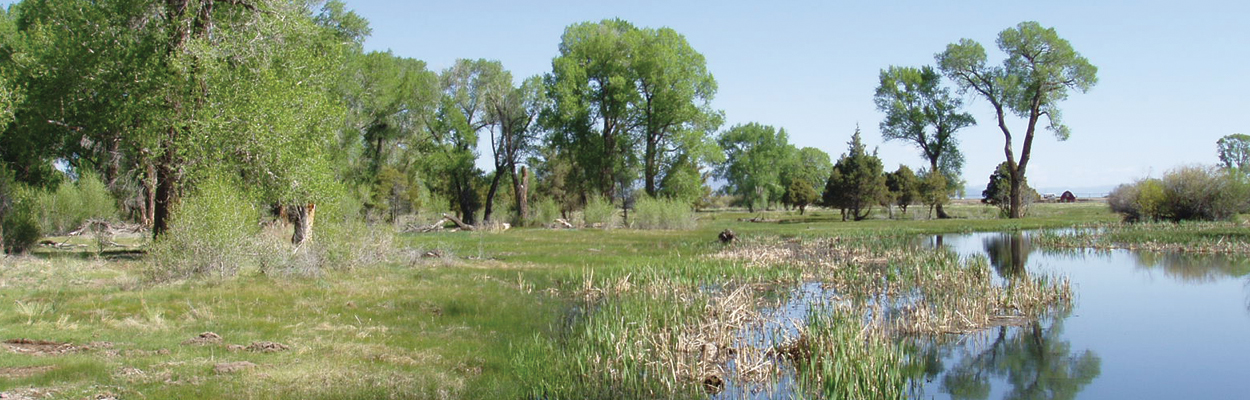


Water is a finite resource which cycles from the atmosphere to the soil and back again to the atmosphere. Water falls from the atmosphere in the form of rain, snow, or hail and is intercepted by plants, plant litter, or directly to exposed soil. When precipitation is intercepted by plants and/or plant litter, it is channeled down through soil and stored in the soil profile by soil particles and finds its way back to the surface through stream bank seepage, wetlands, and springs, or is transpired by plants directly into the atmosphere. Water that penetrates the soil is strongly attracted to drier soil particles; thus the water will keep moving through the soil profile until all of it has adhered to soil particles or passed on to underground reservoirs. If there are few to no plants to capture precipitation, water pools or moves overland, evaporating or entering the soil from the pool, or moves downhill as surface runoff to a stream course.
The greatest benefits to maintaining ground cover, either through a living plant or plant litter, are erosion protection and minimizing drought. Even if it receives the precipitation that falls, bare ground leads to drought in low rainfall years due to high temperatures on bare soil leading to evaporation and the loss of moisture for plant growth. Precipitation is ineffective if the ground is bare. The interception of a raindrop and channeling it into the ground via plant material is of utmost importance to consider in grazing management in the San Luis Valley. The density of grasses and forage plants on a landscape is a strong indicator not only of rangeland health, but also of hydrologic condition. In our area the decline of desirable forage is usually associated with increased bareground and subsequently, a diminishment of water infiltration and an increase or invasion in noxious weeds.
A critical part of grazing management is to maintain or improve forage production. Maintaining and/or improving forage production is directly related to water infiltration and maintaining a properly functioning and effective water cycle. Fostering an effective water cycle on your property will help to even out the imbalances between lower and higher rainfall amounts over the years. When every raindrop that falls is effectively captured, water soaks into the soil and is available for plant roots, soil micro-organisms, and even in a dry year, replenishes underground supplies; very little runs off or is lost via soil evaporation. With non-effective water cycles, drought occurs more frequently because so much water is lost to evaporation or run-off. Growing seasons are diminished due to lack of available water in the soil for plant uptake. A crucial part of grazing management is maintaining sufficient plant litter and cover to sustain an effective water cycle that will protect the soil from fluctuating soil temperatures, drought, and erosion.